We would like to use third party cookies and scripts to improve the
functionality of this website.
Approve
Deny
More info
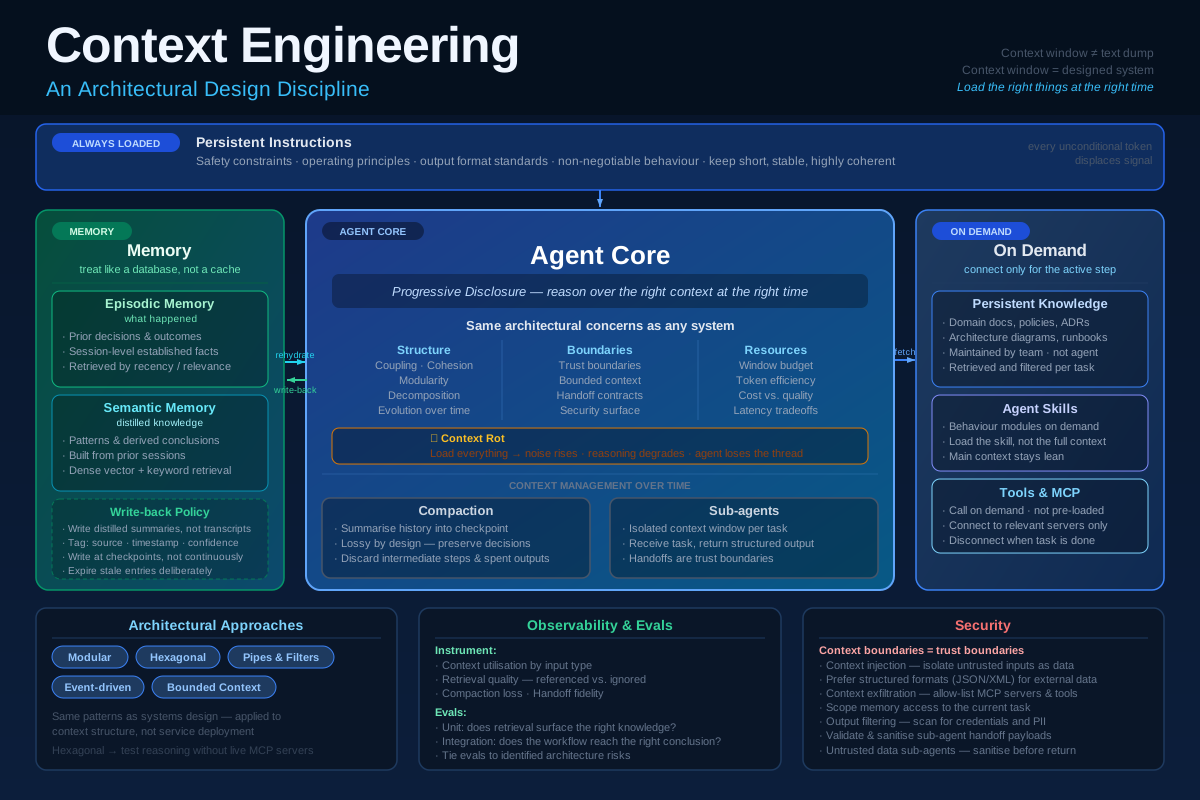
Context engineering is architectural design for AI agents: memory design, architecture patterns applied to context, observability, security boundaries, and the tradeoffs that determine quality.
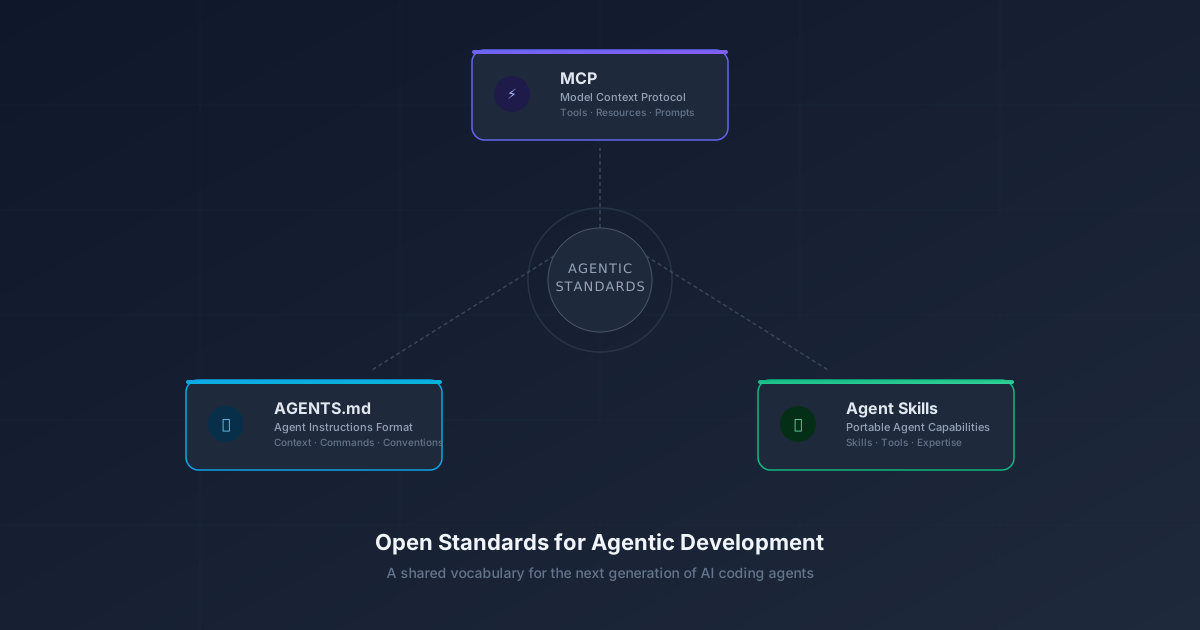
Three open standards — MCP, AGENTS.md, and Agent Skills — are converging to define how agentic software development works. They are vendor-neutral, broadly adopted, and designed to be interoperable: a solid foundation to build on regardless of which agent or tool comes next.
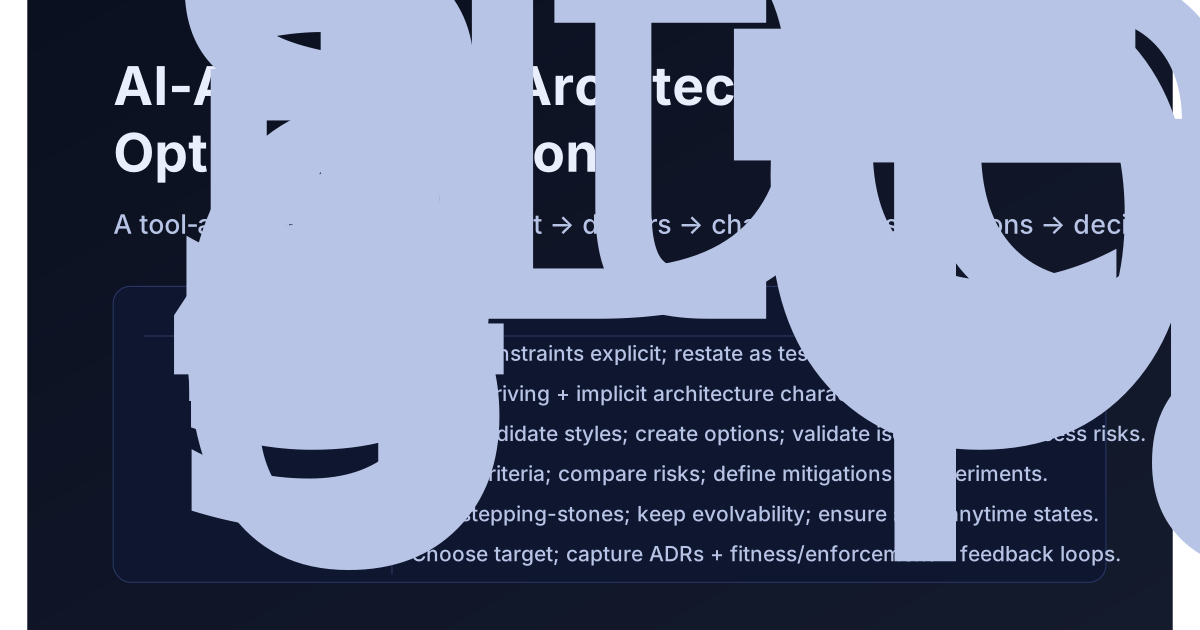
A tool‑agnostic, enterprise‑safe workflow for using AI to generate multiple architecture options, compare tradeoffs explicitly, and capture durable decisions (ADRs + measurable fitness functions).
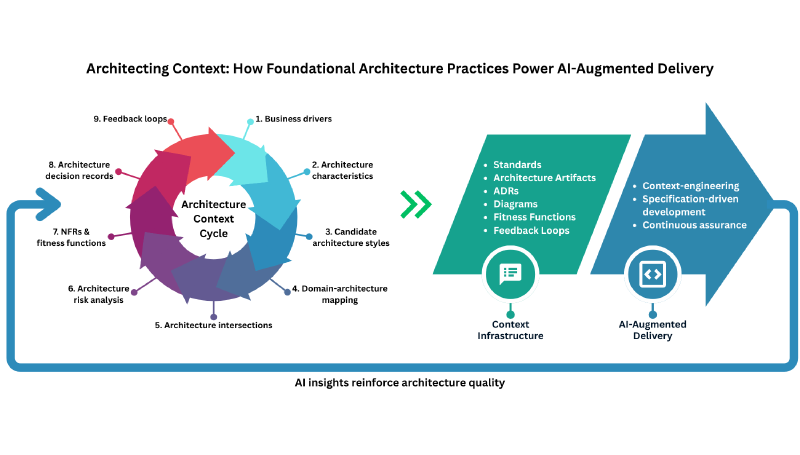
Modern architecture isn’t just about structure. It’s about clarity — understanding why systems are built the way they are and how those decisions connect business goals to technical execution...
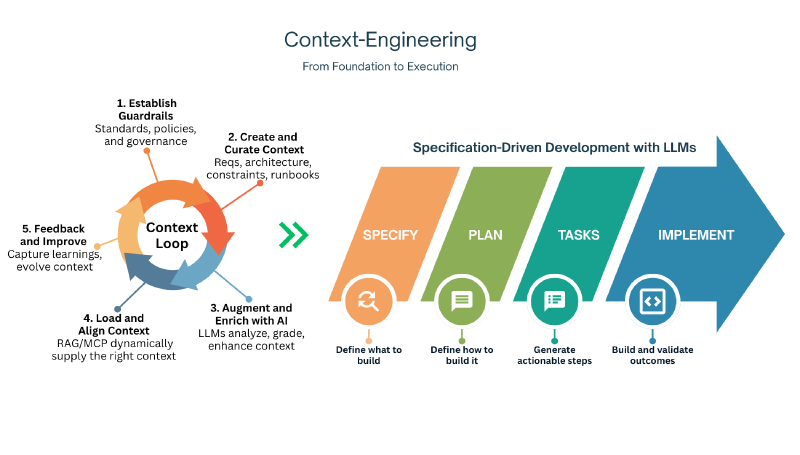
In my previous article, I explored how AI helps build quality into every stage of the SDLC, creating the guardrails that make modernisation safe and scalable. Now, we go a layer deeper — from built-in quality to high-quality context — the foundation that allows AI coding agents to generate meaningful, reliable, and contextually aligned outcomes...
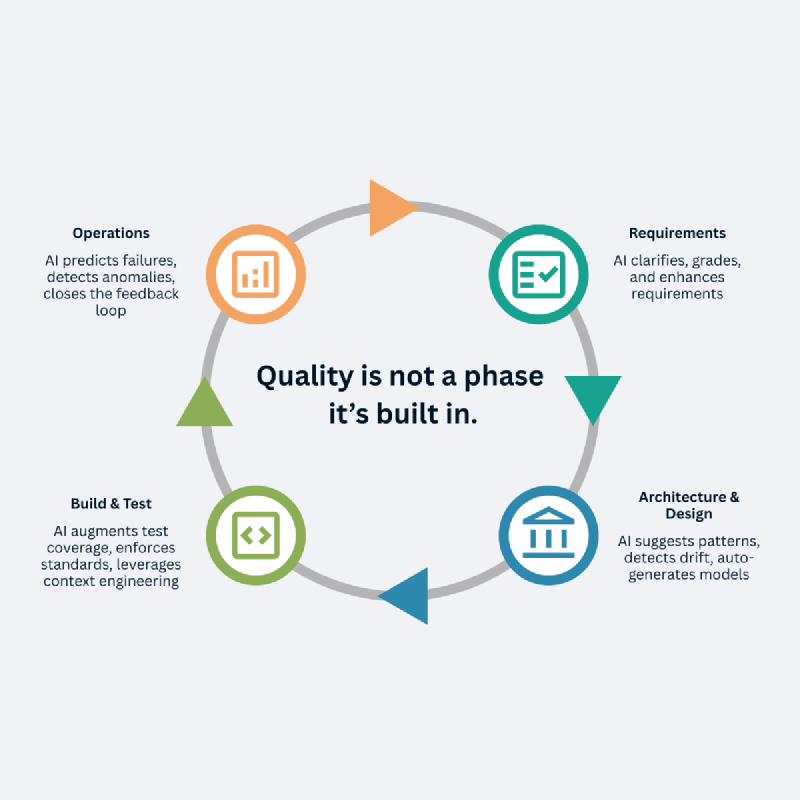
Modernisation is continuous, and AI is reshaping how we build and deliver software. But there’s one truth that remains constant: we cannot test quality into software – it must be built in, at every step of the SDLC...
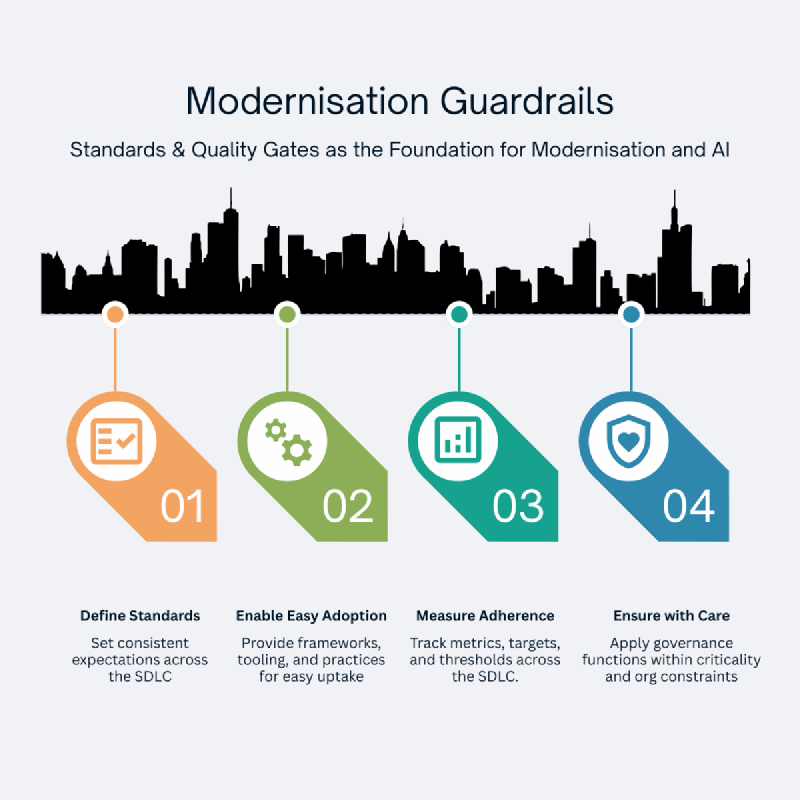
Successful modernisation requires guardrails — consistent standards backed by quality gates are the foundations that lower transformation risk and keep modernisation safe while paving the way for AI...
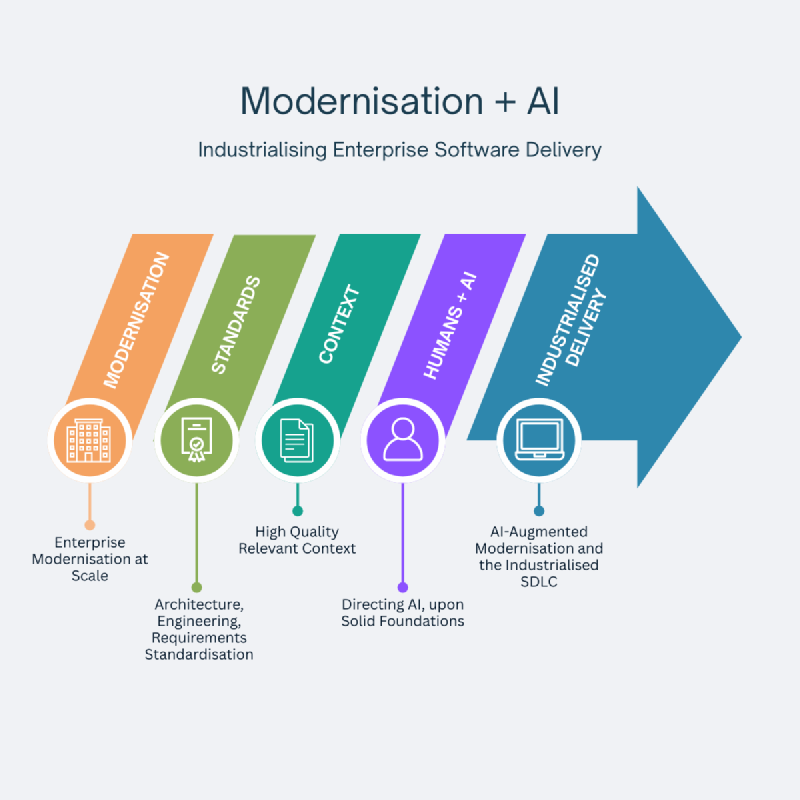
Large enterprises are constantly modernising: consolidating legacy platforms, defining north star architectures, and coordinating complex transformations across teams and domains. This work is not just about streamlining operations — it’s the foundation for future capabilities...
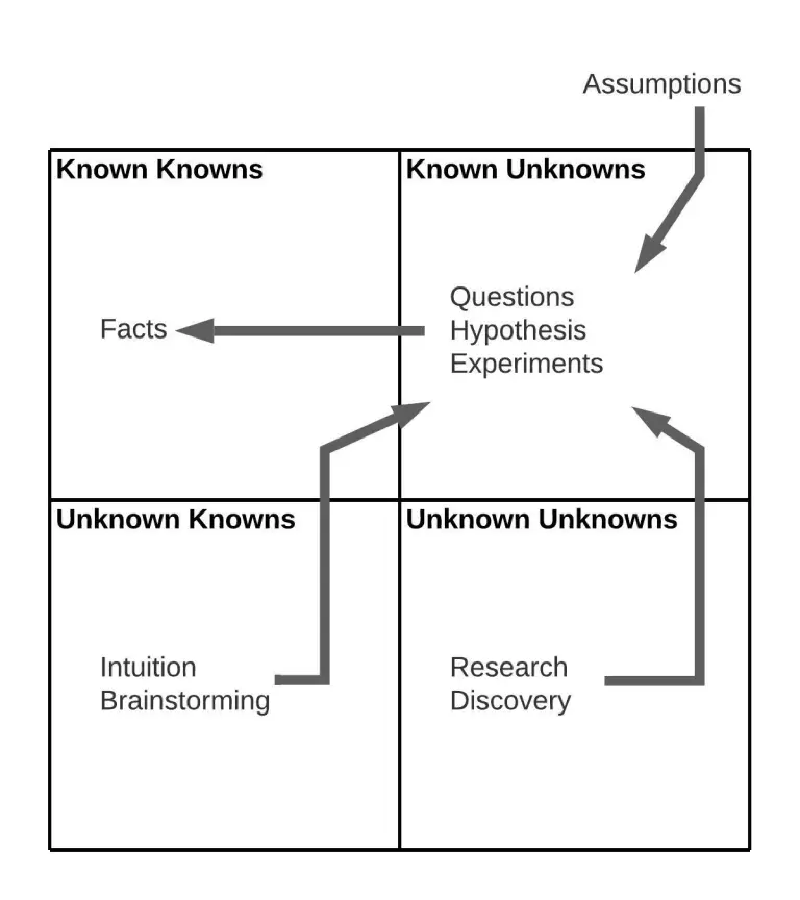
Navigating the Gray with the Known and Unknown framework, a structured approach to achieve continuous clarity of purpose...
By incorporating testing practices into the early stages of software development, teams can not only catch defects early but also shape the architecture, behavior, and interactions of the system...